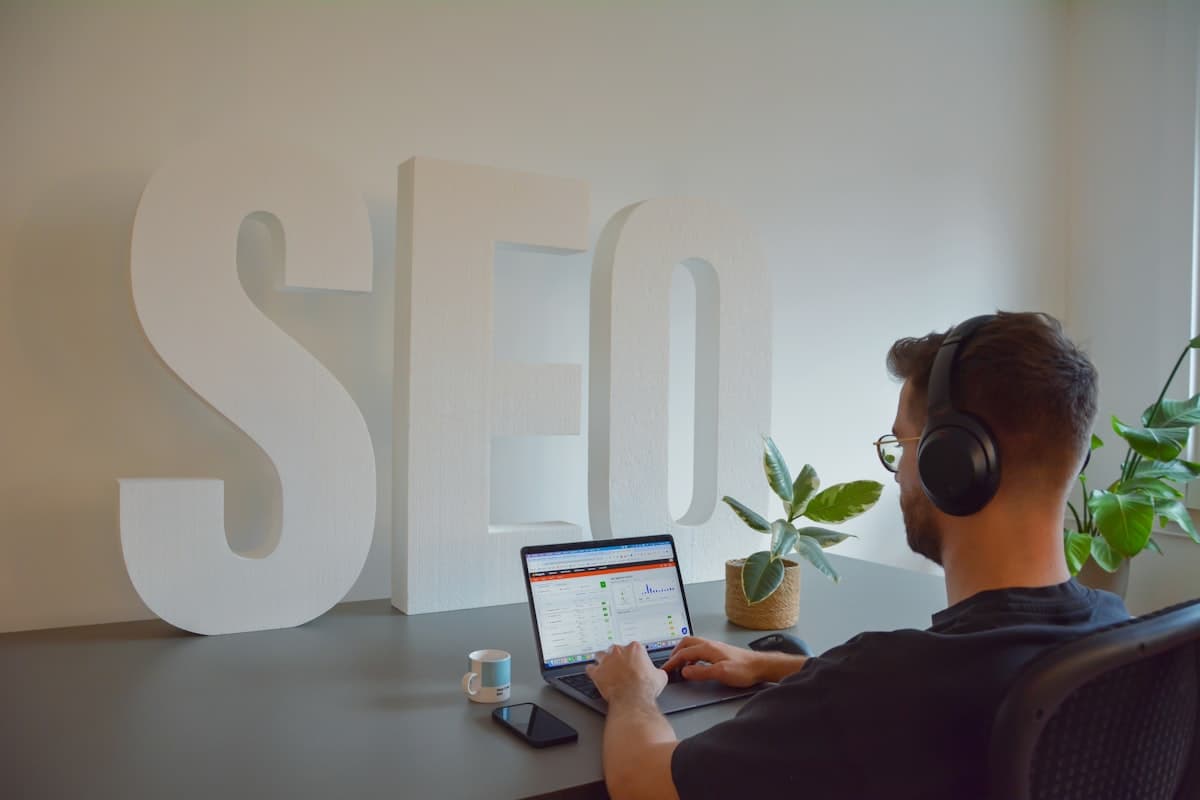
Smart AI SEO Strategies for Small Business Owners
AI-powered SEO tools improve on-page elements like title tags, meta descriptions, schema markup, and internal linking. Quick wins for small businesses to rank faster and dominate local search.
Social Dots Team
18 min read

# Smart AI SEO Strategies for Small Business Owners
SEO used to require expensive agencies or months of trial and error. Not anymore. AI-powered SEO tools are democratizing search optimization, giving small businesses the ability to compete with larger competitors without enterprise budgets. Here's your complete guide to leveraging AI for better search rankings in 2026.
## Why AI Matters for SEO Today
Search engines have evolved dramatically. Google's AI algorithms (RankBrain, BERT, MUM, and now SGE - Search Generative Experience) don't just match keywords anymore—they understand intent, context, and user behavior. To rank in this environment, your SEO strategy needs AI capabilities too.
How AI is transforming SEO:
- Semantic understanding: AI tools analyze what users really mean when they search, not just keywords
- Content optimization: Real-time suggestions to improve readability, relevance, and engagement
- Technical SEO automation: AI identifies and fixes issues faster than manual audits
- Predictive analytics: Forecast which keywords and topics will trend before competitors catch on
- Personalization: Deliver customized content based on user behavior and preferences
Why small businesses need AI for SEO:
- Level the playing field: Compete with larger budgets through automation
- Save time: What took 20 hours manually now takes 2 hours with AI
- Reduce costs: $99/month AI tool vs $2,000/month agency fees
- Better results: AI identifies opportunities humans miss
- Scale faster: Optimize hundreds of pages in minutes, not months
According to HubSpot, businesses using AI for SEO see an average 35% increase in organic traffic within 6 months and 50% reduction in optimization time.
Real-world impact for Canadian small businesses:
A Toronto dental practice implemented AI SEO tools and saw:
- Google rankings improved from page 3 to top 3 for "emergency dentist Toronto" in 4 months
- Organic traffic increased 220%
- New patient inquiries from search up 185%
- Monthly SEO costs reduced from $1,500 to $200
## Using AI for Keyword Discovery
Traditional keyword research involves manually brainstorming terms, checking search volumes, and guessing at user intent. AI-powered keyword discovery is different—it analyzes millions of data points to find opportunities you'd never discover manually.
### AI-Powered Keyword Research Tools
Best AI tools for keyword discovery:
1. SEMrush Keyword Magic Tool (with AI)
- Price: $119/month
- Strengths: Analyzes 24 billion keywords, AI clusters by intent
- Best for: Competitive analysis and local keyword research
- Canadian-friendly: Yes, with .ca domain support
2. Ahrefs Keywords Explorer with AI
- Price: $99/month
- Strengths: Click potential metrics, parent topic identification
- Best for: Understanding keyword difficulty and traffic potential
- Canadian-friendly: Yes, location-specific data
3. SurferSEO Content Editor
- Price: $59/month
- Strengths: Real-time AI optimization while you write
- Best for: On-page content optimization
- Canadian-friendly: Yes
4. ChatGPT/Claude for Keyword Ideation
- Price: $20/month
- Strengths: Creative keyword angle discovery
- Best for: Finding unconventional keyword opportunities
- Canadian-friendly: Yes
### Strategic Keyword Discovery Process
Step 1: Define your core topics
Start with 5-10 main topics your business covers. For a Toronto web design agency:
- Web design
- E-commerce development
- SEO services
- WordPress development
- Website maintenance
Step 2: Use AI to expand each topic
Prompt example for ChatGPT:
"I'm a web design agency in Toronto. Generate 50 keyword variations for 'web design Toronto' including question-based, comparison, and local modifier keywords that small business owners would search."
AI will return keywords like:
- "affordable web design Toronto small business"
- "web designer Toronto vs freelance"
- "how much does website design cost Toronto"
- "best web design agency near me"
- "responsive website design Toronto"
Step 3: Analyze search intent with AI
Use AI tools to categorize keywords by intent:
- Informational: "what is responsive web design"
- Navigational: "Social Dots web design"
- Commercial: "best web designers Toronto"
- Transactional: "hire web designer Toronto"
Focus on commercial and transactional keywords for service pages, informational for blog content.
Step 4: Identify low-competition opportunities
AI tools calculate keyword difficulty scores. Target keywords with:
- 20-40 difficulty score (achievable for small businesses)
- 100+ monthly searches in your target location
- Commercial or transactional intent
- Low competition from direct competitors
Step 5: Find "People Also Ask" questions
AI scrapes Google's "People Also Ask" boxes to find question-based keywords. These are gold for content creation and featured snippet optimization.
Example for "CRM for small business":
- "What is the best free CRM for small business?"
- "Do I need a CRM if I have a small business?"
- "How much should a small business spend on CRM?"
- "What CRM does Shopify use?"
Create dedicated FAQ sections or blog posts answering these questions.
### Local SEO Keyword Strategy for Canadian Businesses
Geographic keyword modifiers to test:
- City name: "web design Toronto"
- Neighborhood: "web design Liberty Village"
- Province: "web design Ontario"
- "Near me" variations: "web designer near me"
- Hybrid: "Toronto web design company"
AI prompt for local keyword discovery:
"Generate 30 local SEO keywords for a [service] business in [city], [province]. Include neighborhood names, nearby landmarks, and question-based local searches."
Advanced tactic: Use AI to identify "parasite SEO" opportunities—high-authority sites (Reddit, Quora, LinkedIn) where you can rank content for keywords you can't rank your own site for yet.
## Improving Meta Tags with AI
Meta titles and descriptions are your first impression in search results. They must be compelling, keyword-optimized, and click-worthy. AI tools analyze millions of high-performing meta tags to suggest optimizations that drive clicks.
### AI-Optimized Title Tag Strategy
Perfect title tag formula (AI-tested):
[Primary Keyword] | [Value Proposition] | [Brand] | [Location if local]
Examples:
- "AI CRM Integration | Save 15 Hours/Week | Social Dots | Toronto"
- "Emergency Plumber Toronto | 24/7 Service | Same-Day Repairs"
- "Best Coffee Downtown Toronto | Organic Fair Trade | Roasted Daily"
AI tools for title optimization:
1. RankMath AI Title Suggestions
- Analyzes top-ranking titles for your keywords
- Suggests power words that increase CTR
- Checks length (50-60 characters ideal)
- Tests keyword placement
2. Frase.io Title Generator
- Creates 10+ title variations based on your content
- Scores each title for SEO potential
- Includes emotional trigger words
3. Copy.ai SEO Title Generator
- Generates click-worthy, SEO-optimized titles
- Multiple variations to A/B test
- Industry-specific suggestions
### Meta Description Best Practices with AI
Optimal meta description structure:
1. Hook (first 10 words) - grab attention
2. Value proposition (next 30 words) - explain benefit
3. Call to action (final 10 words) - prompt the click
Example:
"Struggling with manual data entry? AI CRM integration automates workflows, increases lead conversion by 30%, and saves 15+ hours weekly. Book a free consultation to transform your sales process today."
AI optimization checklist:
- [ ] Length: 150-160 characters (mobile-friendly)
- [ ] Includes primary keyword naturally
- [ ] Contains action words (discover, learn, save, get, book)
- [ ] Creates urgency or curiosity
- [ ] Matches search intent
- [ ] Differentiates from competitors
Using AI to generate meta descriptions:
Prompt: "Write 5 meta descriptions for a page about [topic]. Each should be 155 characters, include the keyword '[keyword]', and emphasize [unique value proposition]."
AI will generate options like:
1. "Discover how AI CRM integration saves Toronto businesses 15+ hours weekly. Boost conversion rates 30%. Free consultation available. Book your AI audit today."
2. "AI-powered CRM for small business: automate workflows, capture more leads, scale without hiring. Trusted by 100+ Canadian companies. Get started free."
Testing meta tag performance:
- Use Google Search Console to monitor CTR by page
- A/B test meta descriptions (change 10 pages at a time)
- AI tools like Clearscope show estimated CTR before publishing
- Target 5-8% CTR for commercial keywords, 3-5% for informational
### Title Tag and Meta Description Mistakes to Avoid
Common errors AI tools catch:
- Keyword stuffing: "Toronto Dentist | Best Dentist Toronto | Dentist Near Me Toronto"
- Too generic: "Welcome to our website | Home"
- Duplicate tags: Same meta description on multiple pages
- Too long: Gets cut off in search results (aim for 50-60 chars for titles, 150-160 for descriptions)
- Missing keywords: Not including primary keyword in title tag
- No differentiation: Looks identical to competitors
AI-powered title tag analysis example:
Before (poor):
"Services | ABC Company"
- Score: 2/10
- Issues: No keywords, generic, no value proposition
After (AI-optimized):
"AI Automation Services Toronto | Save 20 Hours/Week | ABC Company"
- Score: 9/10
- Improvements: Primary keyword, specific benefit, location, brand
## Schema Markup & FAQ Optimization
Schema markup (structured data) helps search engines understand your content and display rich results—ratings, FAQs, business info, and more. AI tools simplify schema implementation, which used to require technical expertise.
### Why Schema Matters for Small Businesses
Benefits of proper schema markup:
- Rich snippets: Star ratings, prices, availability show in search results
- FAQ boxes: Answer boxes appear directly in Google, capturing more clicks
- Local Pack: Business info (hours, phone, location) displays prominently
- Knowledge Graph: Your business info appears in side panel for branded searches
- Voice search optimization: Structured data helps AI assistants understand your content
Impact statistics:
- Pages with schema markup rank 4 positions higher on average (Searchmetrics)
- Rich snippets get 58% more clicks than regular results (Search Engine Land)
- FAQ schema can increase organic visibility by 677% (SEMrush study)
### AI Tools for Schema Generation
Top AI-powered schema tools:
1. Schema App (AI-Powered)
- Price: $149/month
- Automates schema deployment across your entire site
- Validates and monitors for errors
- Best for: Multi-location businesses
2. Merkle Schema Markup Generator
- Price: Free
- AI suggests appropriate schema types
- Copy-paste code generation
- Best for: Single-page schema implementation
3. RankMath/Yoast Schema Blocks
- Price: Free (WordPress)
- Visual schema builder with AI suggestions
- Automatic FAQ and HowTo schema
- Best for: WordPress sites
4. ChatGPT for Schema Generation
- Price: $20/month
- Generates schema code from plain English descriptions
- Quick and flexible for custom schema needs
### Implementing FAQ Schema with AI
FAQ schema is one of the easiest wins for small businesses. It creates expandable answer boxes in Google search results.
Step 1: Identify common customer questions
Use AI to analyze:
- "People Also Ask" boxes on Google
- Your email and chat support logs
- Competitor FAQ pages
- Social media questions
AI prompt:
"Based on the service [your service] in [city], generate 15 common questions customers ask when researching this service. Format as: Question - Brief Answer"
Step 2: Create comprehensive FAQ answers
Each answer should be:
- 40-100 words (readable in snippet)
- Include your keyword naturally
- Provide specific, actionable information
- Link to relevant pages for more details
Example FAQ for AI CRM integration:
Q: How long does AI CRM implementation take?
A: Most small businesses complete AI CRM integration in 2-4 weeks. This includes data migration (3-5 days), workflow setup (1 week), team training (3 days), and optimization (1 week). Custom integrations may add 1-2 weeks. Social Dots provides managed implementation to ensure smooth adoption and ROI within 90 days.
Step 3: Generate FAQ schema markup
ChatGPT prompt:
"Generate FAQ schema markup in JSON-LD format for these questions and answers: [paste Q&As]"
Output will look like:
```json
{
"@context": "https://schema.org",
"@type": "FAQPage",
"mainEntity": [{
"@type": "Question",
"name": "How long does AI CRM implementation take?",
"acceptedAnswer": {
"@type": "Answer",
"text": "Most small businesses complete AI CRM integration in 2-4 weeks..."
}
}]
}
```
Step 4: Implement on your website
Add the JSON-LD code to your page's `` section or use a WordPress plugin like RankMath to add it visually.
Step 5: Validate with AI
Use Google's Rich Results Test or Schema Validator to ensure proper implementation. Fix any errors before publishing.
### Other High-Value Schema Types for Small Businesses
LocalBusiness Schema:
Essential for any business with physical location or service area.
- Business name, address, phone
- Hours of operation
- Service area radius
- Accepted payment methods
- Social media profiles
Service Schema:
Details about each service you offer.
- Service name and description
- Price range or specific pricing
- Service area
- Provider information
Review Schema:
Display star ratings in search results.
- Aggregate rating (average stars)
- Individual reviews
- Review count
HowTo Schema:
Step-by-step guides get special formatting.
- Step-by-step instructions
- Time required
- Tools/materials needed
- Video or image for each step
BreadcrumbList Schema:
Shows navigation path in search results.
- Helps users understand site structure
- Improves click-through rates
AI prompt for multiple schema types:
"Generate complete schema markup (JSON-LD format) for a [business type] in [city]. Include LocalBusiness, Organization, and Service schemas. Business details: [your details]"
## Tracking & Refining with AI Tools
SEO isn't set-and-forget. The best results come from continuous monitoring, testing, and refinement. AI-powered analytics tools identify issues and opportunities faster than humans ever could.
### Essential AI SEO Monitoring Tools
1. Google Search Console (Free)
- Track rankings, clicks, impressions
- Identify crawl errors and indexing issues
- See which queries drive traffic
- Monitor Core Web Vitals
Use AI to analyze GSC data:
Export search queries data → Upload to ChatGPT → Ask: "Analyze this Google Search Console data. Identify my top opportunities for quick ranking improvements and content gaps to fill."
2. Ahrefs Site Audit (AI-Powered)
- Price: $99/month
- Automatically crawls your site for 140+ SEO issues
- Prioritizes fixes by impact
- Monitors backlink profile changes
AI features:
- Predicts impact of fixing each issue
- Suggests content updates for declining pages
- Identifies cannibalization (multiple pages competing for same keyword)
3. SurferSEO Content Audit
- Price: $59/month
- Compares your content to top-ranking pages
- Suggests keywords to add, remove, or emphasize
- Provides content score and improvement recommendations
Workflow:
- Run audit monthly
- AI ranks pages by optimization opportunity
- Update top 10 pages first
- Re-audit after 4 weeks to measure impact
4. Semrush Position Tracking with AI Insights
- Price: $119/month
- Tracks keyword rankings daily
- AI identifies ranking fluctuations and causes
- Competitor movement alerts
AI analysis features:
- Correlates ranking changes with algorithm updates
- Suggests immediate actions for ranking losses
- Forecasts traffic based on ranking trends
### AI-Powered A/B Testing Strategy
Most small businesses don't A/B test SEO changes because it's complex. AI simplifies this by running multivariate tests automatically.
What to A/B test:
- Title tags (test different value propositions)
- Meta descriptions (test different CTAs)
- Content length (short vs comprehensive)
- Heading structures (benefit-first vs question-first)
- Internal linking patterns
Process:
1. Select 20 similar pages (same template, similar content)
2. Split into test (10 pages) and control (10 pages)
3. Make optimization to test group
4. Monitor for 4-8 weeks
5. Analyze results with AI
AI analysis prompt:
"I ran an SEO A/B test. Control group: [data]. Test group: [data]. Analyze statistical significance and recommend whether to roll out the change site-wide."
### Monitoring Keyword Cannibalization with AI
Cannibalization happens when multiple pages compete for the same keyword, diluting your rankings. AI tools identify and fix this automatically.
How AI detects cannibalization:
1. Crawls all your pages
2. Analyzes keyword targeting on each page
3. Identifies pages with >80% keyword overlap
4. Suggests consolidation or differentiation strategies
Fix strategies AI recommends:
- Merge pages: Combine thin content into one comprehensive resource
- Differentiate: Adjust targeting so each page focuses on distinct keywords
- Canonicalize: Tell Google which page is primary
- 301 redirect: Redirect weaker page to stronger one
Tools:
- Ahrefs Site Audit (Cannibalization Report)
- Semrush On-Page SEO Checker
- SurferSEO Content Audit
### Using AI for Competitive Analysis
What to track:
- Competitor keyword rankings
- Their content publishing frequency and topics
- Backlink acquisition patterns
- Technical SEO changes
AI competitive analysis workflow:
Step 1: Identify 3-5 direct competitors in your market
Step 2: Use AI tools to extract their SEO data
- SEMrush Competitive Research
- Ahrefs Competitor Analysis
- SpyFu Keyword Research
Step 3: Upload data to AI for analysis
ChatGPT prompt:
"I'm a [business type] in [city]. My competitor [domain] ranks for these keywords: [list]. Identify gaps where they rank but I don't, and suggest content topics to target those gaps."
Step 4: Implement gap-filling strategy
- Create content targeting competitor keywords you don't rank for
- Build backlinks to match or exceed competitor link profiles
- Optimize pages where competitors outrank you
## Case Examples of SEO Wins
Let's look at real Canadian small businesses that used AI SEO strategies to achieve significant results.
### Case Study 1: Toronto Home Cleaning Service
Business: Residential and commercial cleaning company
Challenge:
- Ranking page 3-5 for main keywords
- Competitors with larger budgets dominated top 3
- Limited time for manual SEO
- No in-house SEO expertise
AI SEO Strategy:
1. Used Semrush AI to identify 50 low-competition local keywords
2. Implemented FAQ schema on 12 service pages with AI-generated markup
3. Optimized meta tags using RankMath AI suggestions
4. Created 8 AI-assisted blog posts targeting question-based keywords
Tools used:
- SEMrush ($119/month)
- RankMath Pro ($59/year)
- ChatGPT Plus ($20/month)
- Total monthly cost: $144
Results after 6 months:
- 23 keywords moved to page 1 (previously page 2-5)
- Organic traffic increased 340%
- Quote requests from organic search up 280%
- Cost per lead decreased 65%
- ROI: 580% (revenue increase vs tool costs)
Key tactic that worked:
AI-identified "house cleaning before moving out Toronto" as low-competition opportunity. Created comprehensive guide that ranks #1, drives 200+ visits monthly.
### Case Study 2: Ottawa Restaurant
Business: Family-owned Italian restaurant
Challenge:
- Not appearing in "restaurants near me" searches
- No Google Knowledge Panel
- Poor reviews visibility
- Losing business to chain restaurants
AI SEO Strategy:
1. Implemented LocalBusiness schema with AI-generated markup
2. Optimized Google Business Profile using AI content suggestions
3. Added Review schema to display star ratings in search
4. Created menu pages with Recipe schema for signature dishes
Tools used:
- Schema App Highlighter (Free)
- ChatGPT Plus for content ($20/month)
- BrightLocal for local SEO tracking ($35/month)
- Total monthly cost: $55
Results after 4 months:
- Google Maps listing appeared in top 3 for 18 local searches
- Organic search traffic up 190%
- Online reservations increased 150%
- Average order value up 22% (customers viewing menu online first)
- "Restaurants near me" clicks: 0 → 450 per month
Key tactic that worked:
AI-optimized menu descriptions with strategic keywords ("authentic Italian pasta downtown Ottawa") appeared in voice search results.
### Case Study 3: Vancouver Financial Advisor
Business: Independent financial planning practice
Challenge:
- Highly competitive keywords dominated by large firms
- Compliance restrictions on claims
- Limited content publishing resources
- Need to establish thought leadership
AI SEO Strategy:
1. AI identified long-tail question keywords with low competition
2. Created FAQ pages with comprehensive answers and FAQ schema
3. Developed 15 educational blog posts using AI content assistance
4. Optimized for featured snippets with AI-structured content
Tools used:
- Ahrefs ($99/month)
- SurferSEO ($59/month)
- Jasper AI for content assistance ($49/month)
- Total monthly cost: $207
Results after 9 months:
- Captured 8 featured snippets (position zero)
- Organic traffic increased 420%
- Email newsletter signups up 310%
- Client consultation bookings increased 185%
- Average new client value: $4,800
- ROI: 2,100%
Key tactic that worked:
AI-optimized FAQ page "How much do I need to retire in Canada?" ranks #1 and drives 600+ monthly visitors. Conversion rate to consultation: 12%.
### Common Success Patterns
What these businesses did right:
1. Started with low-hanging fruit: Targeted achievable keywords, not competitive head terms
2. Implemented quick wins first: Schema markup and meta tag optimization (< 1 week implementation)
3. Focused on local: Geographic modifiers reduced competition
4. Used affordable AI tools: Total costs $50-200/month, not thousands
5. Published consistently: 2-4 pieces of optimized content monthly
6. Measured religiously: Weekly keyword tracking, monthly audits
Timeline to results:
- First improvements: 4-6 weeks (technical SEO fixes)
- Significant traction: 3-4 months (content gains momentum)
- Sustained growth: 6-12 months (compound effect of ongoing optimization)
## Ready to Dominate Your Local Search Results?
AI has made professional-grade SEO accessible to every small business. You don't need a $5,000/month agency—you need the right tools, a strategic approach, and consistent execution.
Your 90-day AI SEO quick-start plan:
Weeks 1-2: Foundation
- Implement LocalBusiness and FAQ schema
- Optimize title tags and meta descriptions with AI
- Set up tracking (GSC, analytics, rank tracker)
Weeks 3-6: Content Creation
- Publish 4 AI-assisted blog posts targeting low-competition keywords
- Create comprehensive FAQ pages with schema
- Optimize existing pages with AI content suggestions
Weeks 7-10: Technical Optimization
- Run AI site audit and fix top 20 issues
- Improve site speed (Core Web Vitals)
- Fix mobile usability issues
Weeks 11-12: Measurement & Refinement
- Analyze results with AI tools
- Double down on what's working
- Adjust strategy for next 90 days
Need help implementing AI SEO for your Toronto business?
Social Dots specializes in AI-powered SEO services for Canadian small businesses. We handle everything from strategy to implementation, using the latest AI tools to deliver results in months, not years. Our clients typically see 200-400% increases in organic traffic within 6 months.
Get in Touch - We'll analyze your site with AI tools and provide a customized roadmap to dominate your local search results.
---
Related Resources:
- 5 Benefits of AI CRM Integration for Small Businesses
- Top AI Marketing Tools Small Businesses Must Use in 2026
- SEO Services Toronto
About the Author: This article was written by the Social Dots team, Toronto's leading digital marketing agency specializing in AI-powered SEO strategies for Canadian small businesses.
Ready to Transform Your Business with AI?
Social Dots specializes in AI automation solutions for Canadian small businesses. Let's discuss how we can help you implement the strategies covered in this article.